
Should You Rewire Your Pool Equipment for a Timer or Use a Plug-In Timer?
By Darren McClurg, CMI ·
Owning a swimming pool in Ottawa means keeping up with regular maintenance, and your pool pump plays an important role in keeping the water circulating and clean. But running the pump manually every day isn’t always convenient.
That leads many homeowners to ask: Should you have an electrician install a dedicated pool timer, or can you simply use a plug-in outdoor timer?
Both options can work in the right situation. The best choice depends on your pool equipment, electrical setup, voltage requirements, and, most importantly, safety.
Here’s what Ottawa homeowners should consider before choosing a pool timer.
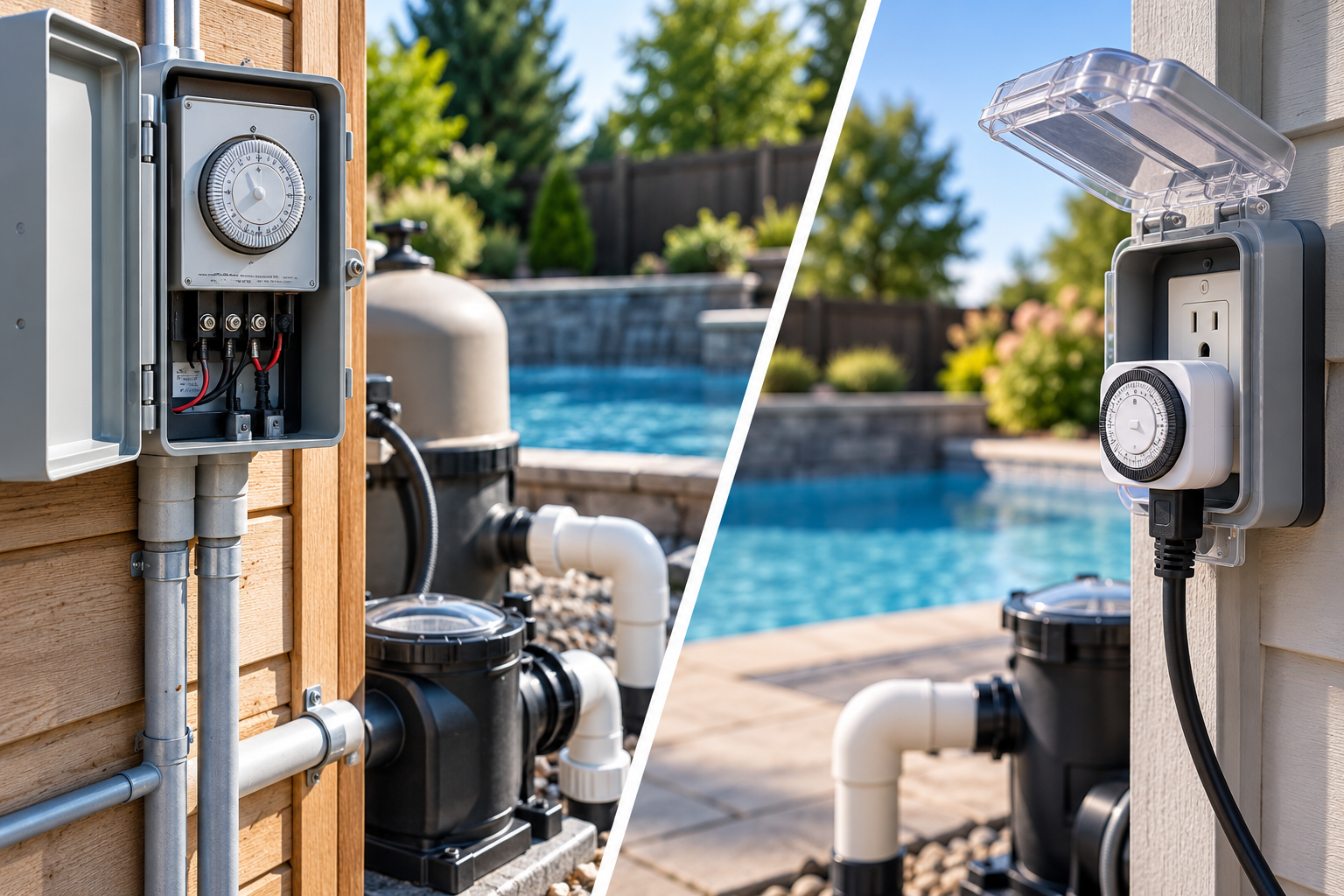
Option 1: Install a Dedicated Hardwired Pool Timer
A hardwired pool timer is permanently connected to the pool’s electrical system. Because this involves electrical wiring, installation should be completed by a qualified electrician in accordance with applicable requirements.
Advantages of a Hardwired Pool Timer
Better Reliability
Hardwired timers are designed for regular operation and can provide a more permanent solution for controlling pool equipment.
Suitable for Higher Electrical Loads
Some pool pumps and other equipment operate at voltages or loads that aren’t appropriate for a typical plug-in timer. A properly selected hardwired timer can be matched to the electrical requirements of the equipment.
Cleaner Installation
A permanent installation eliminates loose cords and bulky plug-in timers around the equipment area. Components can be housed in suitable weather-resistant enclosures.
Improved Safety
When properly installed, a dedicated timer can reduce potential problems associated with loose plugs, moisture exposure, accidental disconnection, and improperly rated equipment.
A More Professional Setup
For homeowners planning to keep their pool long-term, a properly installed electrical system can provide a cleaner and more permanent solution than relying on temporary-looking connections.
Disadvantages of a Hardwired Timer
The main drawback is cost. Installation expenses vary depending on the existing electrical system, location of the pool equipment, wiring requirements, and whether upgrades are necessary.
It also requires professional installation and isn’t easily relocated once installed.
Option 2: Use a Plug-In Pool Timer
Some pool pumps are designed to plug into a receptacle. In these situations, a properly rated outdoor plug-in timer may be an option.
This approach is especially common with some above-ground pool systems.
Advantages of a Plug-In Timer
Lower Upfront Cost
A plug-in timer is generally less expensive than having a dedicated timer professionally installed.
Easy Installation
If the pool equipment and electrical setup are suitable, installation can be as simple as connecting the timer and programming the desired operating schedule.
No Permanent Electrical Changes
A plug-in timer doesn’t normally require modifications to the home’s permanent electrical system.
Easy to Replace
If the timer eventually fails, replacing it is typically straightforward.
Disadvantages of a Plug-In Timer
Not Appropriate for Every Pool Pump
This is one of the biggest considerations.
A timer must be properly rated for the voltage, amperage, and type of electrical load it will control. A timer that physically accepts a plug isn’t automatically safe for the equipment connected to it.
Always check the pool equipment manufacturer’s requirements and the timer’s specifications.
Exposure to Ottawa Weather
Outdoor electrical equipment in Ottawa can face rain, snow, ice, temperature changes, and UV exposure. Even equipment designed for outdoor use needs to be installed and maintained correctly.
Additional Connection Points
Every additional plug and connection introduces another potential location for moisture, corrosion, deterioration, or a loose connection.
Accidental Disconnection
Plug-in equipment can also be accidentally disconnected while someone is cleaning, maintaining, or working around the pool.
Pool Electrical Safety Should Come First
Water and electricity are a dangerous combination, making electrical safety particularly important around swimming pools.
Homeowners should ensure that electrical equipment is properly rated for its intended use and location. Depending on the installation, appropriate GFCI protection, weather-resistant equipment, proper enclosures, bonding, grounding, and other electrical safety measures may be required.
Avoid treating extension cords as a permanent solution for pool equipment.
If you’re unsure whether your existing pool electrical setup is appropriate, have it evaluated by a qualified electrician.
Hardwired vs. Plug-In Pool Timer: Which Is Better?
There isn’t one answer that works for every pool.
A plug-in timer may be appropriate when the pump is specifically designed for plug-in operation, the electrical supply is suitable, and the timer is properly rated for the equipment and outdoor environment.
A hardwired timer may make more sense when you have permanently installed equipment, higher electrical loads, multiple pool components, or simply want a cleaner and more permanent installation.
Don’t choose based on price alone. The timer needs to match the electrical requirements of the equipment.
Why Pool Electrical Systems Matter During a Home Inspection
When purchasing a home with a swimming pool, it’s easy to focus on the condition of the pool itself and overlook the equipment powering it.
Electrical concerns around pools can be particularly important because of their proximity to water.
During a home inspection, accessible electrical components can reveal issues that deserve further evaluation. This might include damaged receptacles, questionable wiring, inappropriate connections, missing protection, deteriorated outdoor equipment, or other visible safety concerns.
A home inspection isn’t a substitute for an electrical inspection by a licensed electrician, but it can help identify conditions that warrant further investigation.
If you’re searching for the most trusted home inspector in Ottawa, choose an inspector who takes the time to examine accessible systems throughout the property and clearly explains the findings instead of simply handing you a checklist.
Final Thoughts
A pool timer can make pool ownership more convenient and help you control when your equipment operates. But convenience should never come at the expense of electrical safety.
For some systems, a properly rated plug-in timer may be perfectly suitable. For others, professional hardwiring is the safer and more practical long-term solution.
Before making the change, check the requirements of your pool equipment and have a qualified electrician evaluate the installation whenever you’re unsure.
Looking for the Most Trusted Home Inspector in Ottawa?
Buying a home with a pool? Selling your property? Or simply want a better understanding of your home’s condition?
Bent Nails Ottawa Master Home Inspection & Tarion Warranty provides thorough home inspections designed to help Ottawa homeowners and buyers understand what they’re dealing with before small concerns become expensive surprises.
We inspect accessible components of your home’s major systems and provide clear findings so you can make informed decisions about your property.
Book your Ottawa home inspection today with Bent Nails Ottawa Master Home Inspection & Tarion Warranty.