
Issues with Plug Under Tankless Water Heater Explained Part 3
By Darren McClurg, CMI ·
Issues with Plug Under Tankless Water Heater Explained Part 3


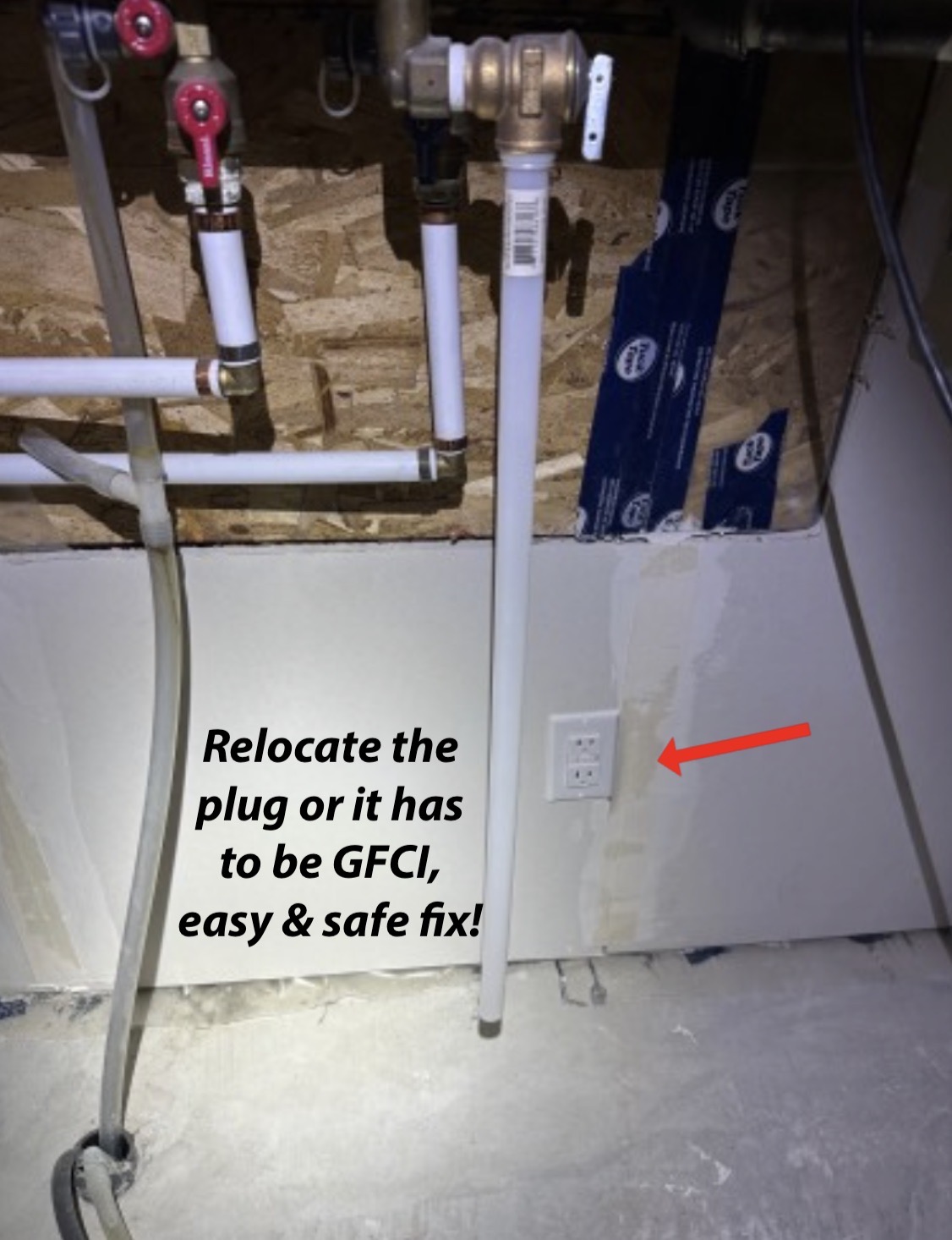
What’s wrong with these images?
Bad locations to be a fire hazard or risk of electrocution.
Key points about water on a regular outlet:
-
Short circuit:
Water can bridge the gap between exposed electrical components, causing a sudden surge of current and a short circuit. -
Electrical shock:
If you touch a wet outlet while it’s energized, you could receive an electric shock. -
Fire hazard:
The combination of a short circuit and excess heat from the water can potentially ignite nearby flammable materials, causing a fire.
What to do if water spills on an outlet:
- Turn off power: Immediately turn off the circuit breaker at the electrical panel that supplies power to the outlet.
- Do not touch: Avoid touching the wet outlet with your hands or any wet objects.
- Dry the area: Not with a dryer! Carefully dry the area around the outlet using a dry cloth or paper towel.
- Call a professional: If the outlet is wet or you suspect damage, contact a qualified electrician to inspect and repair it. Why call a professional, when they’re trying to harm me?!
All these plugs above have to be GFCI protected:
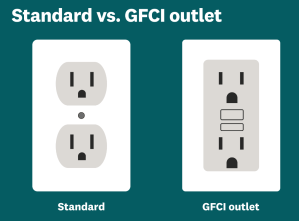
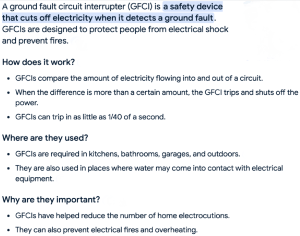
Or to be simply relocated, like the 3 photos below:
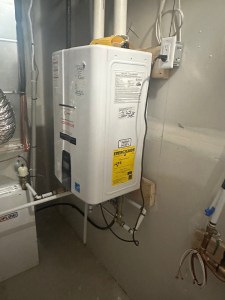
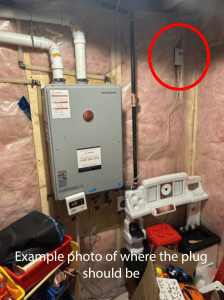
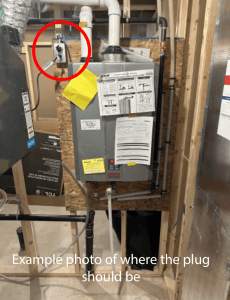
Those plugs have to be move or GFCI protected immediately!
If the basement floods with those plugs:
Do not enter your basement if you know or suspect water has risen above the level of electrical outlets, baseboard heaters, furnace or is near your electrical panel. Electricity can move through water or wet flooring and cause a severe electrical shock.
With the washer sitting in a drip pan it could become live, severely injuring or possibly cause death. It takes only one-tenth of an amp to stop your heart, that one-tenth can come from any plug. The washer plug is part of a 15 or 20amp breaker, if you touch the washer being a live component. Thats not a maybe, you or your child will get injured. Thats a Bent Nails guarantee you’re dead.
You can potentially die from an electric shock on a 15 amp breaker, even though the breaker itself is designed to trip at that amperage, because the key factor in shock severity is the current passing through your body, which can be fatal even at relatively low amperage if it travels through the heart; therefore, always practice proper electrical safety precautions when working with any electrical circuit.
Yes, if a plug is close to the basement floor and the area floods, you can get electrocuted if you step in the water, as water readily conducts electricity and can easily transfer a current from a live electrical source to your body if you come into contact with it; always turn off the power to the basement circuit before entering a flooded area and never attempt to walk through floodwater near electrical outlets.
Key points to remember:
-
Water is a conductor: When water touches a live electrical wire, it can become electrified, allowing the current to travel through the water and potentially to you if you step in it.
-
No need for direct contact: Even if the plug isn’t fully submerged, the water near it can still be energized, putting you at risk if you step in that area.
-
Safety precautions:
-
Turn off power: Before entering a flooded basement, always turn off the power at the main breaker panel.
-
Stay away from water: Never walk through floodwater, especially near electrical outlets or appliances.
-
Call a professional: If your basement floods, contact a licensed electrician to inspect and repair any electrical damage before using the space again. Why would I call a professional, when those idiots caused this?!
When ignorant people want to debate a water heater being a water source:
Yes, a water tank can be considered a water source, as it stores water that can be accessed and used for various purposes, although it is not the original source of the water itself; it simply acts as a reservoir to hold water from a primary source like a river, well, or rainwater collection system.
-