
How To Identify An Ice Dam
By Darren McClurg, CMI ·
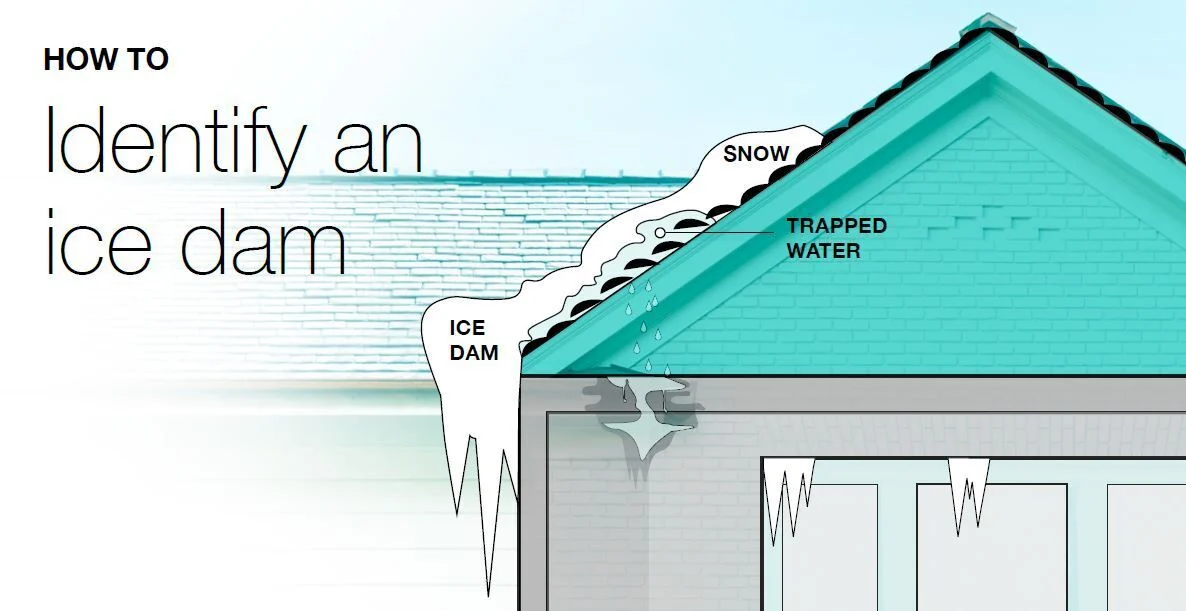
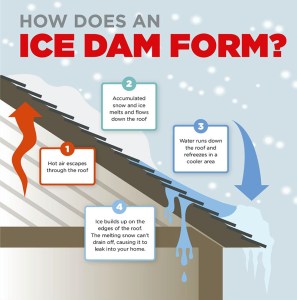
What is ice damming?!
They occur when heavy snow buildup melts during the day and then refreezes when temperatures drop overnight. After several days of melting-freezing cycles, it’s common for the melted water and ice to work up under the shingles until water enters the attic and eventually does damage to the ceilings, wall and contents.
Inadequate insulation makes your roof warm enough to melt snow, even when the outside temperature is well below freezing. In short, poor ventilation or insulation may be a cause of ice dams.
At least 80% of ice dams form along the eaves of a roof due to the cycle discussed above. On roofs with a low pitch, even an ice dam of one to two inches can cause significant leaks and interior damage. Valleys are also subject to ice dam formation, including the valley area of dormers.
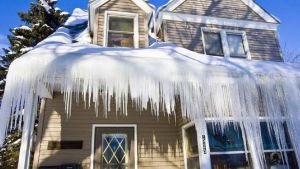
Icicles hanging from your roof can signal an ice dam. However, ice dams can be present without the existence of icicles. Icicles that exist only on home’s gutters without water trapped behind it are a normal winter occurrence, not a warning sign that an ice dam has formed.
An ice dam is a ridge of ice that forms at the edge of a roof and prevents melting snow (water) from draining off the roof. The water that backs up behind the dam can leak into a home and cause damage to walls, ceilings, insulation and other areas.
How to prevent ice dams from causing roof leaks into the interior?
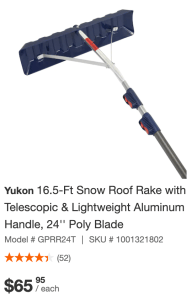
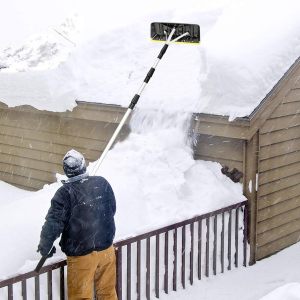
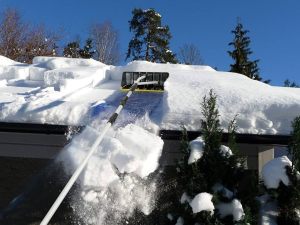
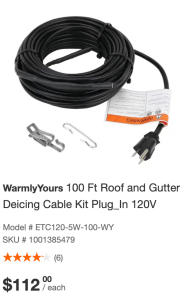
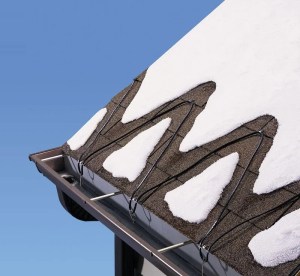
Use electric de-icing cables or a snow-melting system. This heated cables work to melt snow and ice build-up using electric heat. Use a roof rake (also called a snow rake) to pull fresh snow and debris off your roof to prevent build up.
You have to take care of your attic more then you think. This can’t be out of sight out of mind scenario, repair can be very costly. You’re looking $40K – $50K+ if you have to replace the entire roof.
I recommended to look in the attic at least 2-3 times during the winter. What are you looking for? Frost, the silent killer. There should not be any air leakage from the house into the attic space. Recessed lights, skylights, complex roof designs, and heating ducts in the attic will all increase the risk of ice dam formation. Contact a experienced contractor to better evaluate.
Contact Bent Nails today to help inspect your home. Follow the link below: